
energy mostly in cement production manufacturer Grasping strong production capability, advanced research strength and excellent service, Shanghai energy mostly in cement production supplier create the value and bring values to all of customers.
 WhatsApp)
2 in the atmosphere both directly when calcium carbonate is heated producing lime and carbon dioxide and also indirectly through the use of energy if its production involves the emission of CO 2 The cement industry produces about 10 of global manmade CO 2 emissions of which 60 is from the chemical process and 40 from burning fuel
The plant first produced cement in 1967 as Ideal Cement Now the plant produces multiple types of cements which are then used in the production of concrete Moreover the Seattle plant produces about 600000 tons of various cements each year Production is mostly sold in Washington State and Oregon
The energy intensity or embodied energy is defined as the energy required to produce a material from its raw form per unit mass of material produced The energy is usually measured as the lower heating value of the primary fuels used plus any other primary energy contributions
Nov 01 2019· Although the cement industry used only onequarter of one percent of total US energy it is the most energyintensive of all manufacturing industries with a share of national energy use roughly 10 times its share of the nations gross output of goods and services
Oct 10 2019· Cement kilns work better with energydense internal fuel resistive electricity on the outer surface doesn''t work as well But the biggest limitations are costs where the news is somewhat
Alternative Fuel Use in Cement Manufacturing 6 12 Emissions from cement production More than 50 of the total CO2 from cement production results from the chemical reaction that converts limestone into clinker the active ingredient in cement This chemical reaction accounts for approximately 540 kg CO2 per tonne of clinker
Energy consumption assessment in a cement production plant is studied in this paper and a guideline for reducing energy consumption is provided according to a national standardISIRI 7873 Based on energy assessment several energy saving actions were implemented and valuated
Aug 28 2017· The production of 1 m³ of concrete requires 2775 MJ of energy This energy comes mostly from oil burning which generates CO2 2775 MJ of energy is produced by 037 barrels of oil Saving concrete eg by adopting appropriate building solutions means therefore not only reducing fossil fuels consumption but also pollutant emissions
ENERGY STAR Focus on Energy Efficiency in Cement Manufacturing The "cement focus" is a partnership between EPA''s ENERGY STAR program and US cement producers to improve energy efficiency within their operations Tools are available here to help improve manufacturing energy efficiency save money and reduce greenhouse gas emissions Cement
Cement accounts for at least 5 percent of anthropogenic emissions of greenhouse gases and according to some estimates this share may be even higher At the same time energyrelated expenses in the cement sector mostly on fossil fuels and electricity account for 30 to 40 percent of the industry''s cash costs While current energy
The industry adopts leading edge practices to reduce costs and emissions Since 1990 the industry has moved towards more energy efficient clinker production technology Efficient precalciner kilns now account for over 98 per cent of clinker production in Australia Australian cement producers continue to utilise leading edge practices to reduce costs as well as emissions Cement and Emissions The
Cement is an energyintensive industry in which the grinding circuits use more than 60 of the total electrical energy consumed and account for most of the manufacturing cost The requirements for the cement industry in the future are to reduce the use of energy in grinding and the
Cement production is energyintensive and contributes 5 of global greenhouse gas emissions But factories can reduce emissions and supply up to 30 of their own energy needs by using wasteheat recovery technology The World Bank Group''s IFC will encourage use of the technology in five regions where the cement industry is expected to grow
Moreover according to the national standard for electrical and thermal energy consumption in the process of cement production ISIRI 7873 the studied plant was identified as a high consumption one in 2008 while it successfully complied with the standard in 2010 after assessing the energy utilization
Energy represents 20 to 40 of the total cost of cement production The production of cement clinker from limestone and chalk by heating limestone to temperatures above 950°C is the main energy consuming process Portland cement the most widely used cement type contains 95 cement clinker
The production process of cement clinker is energyintensive and requires a large amount of fuel Table 1 shows the increase in fuel consumption experienced by Mugher Cement plant over time Table 1 Furnace Oil Consumption by Mugher Cement Plant Taddele 2008 Year Fuel Consumed litres Fuel Birr
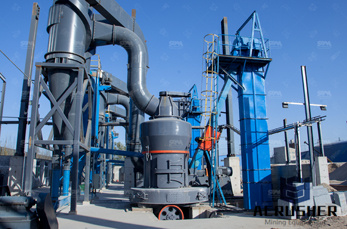
Cement production is an energyintensive process in which energy represents 20 to 40 of total production costs Most of the energy used is in the form of fuel
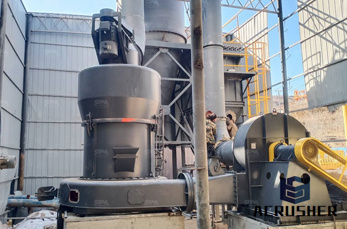
Cement production is an energyintensive process consuming thermal energy of the order of 33 GJtonne of clinker produced Electrical energy consumption is about 90 – 120 kWhtonne of cement Giddings et al 2000 European Commission EC 2001
Manufacturing cement is highly energyintensive First energy is used in the form of fuel to fire the rotary kilns to produce the cement clinker Second electrical energy is used to operate various units – in particular raw material and cement grinding systems
WhatsApp)
 Online Chat
 Sales Hotline